Products
Every kind of IBC tote, one quote request.
Rebottled and reconditioned totes, new units, stainless containers for the liquids that eat plastic, and the parts that keep them working. Tell us what you need and we match your request with a partner supplier in our network.
The short answer
Rebottled (new bottle, reused cage) · Reconditioned (washed original bottle) · New · Stainless steel · Parts and accessories. Sizes commonly run from about 120 to 330 gallons. Pricing is by quote from partner suppliers.
Decide fast
A grade chooser that takes ten seconds.
Most of the time the right answer is the less expensive one. Match the container to the job, not to the best-looking option.
| If your liquid is… | Consider | Why |
|---|---|---|
| Potable water, food, beverage, pharma | New or rebottled, with documentation | Ask the supplier for documentation of the bottle and its history, and check current regulations for your product. |
| Resold to an end customer in the tote | Rebottled | New bottle means clean, unstained walls. The cage does not need to be new for anyone. |
| Fertiliser, nutrient mix, field water | Reconditioned, cosmetic grade | Cosmetic wear is irrelevant to a crop. Put the money into a good valve. |
| Industrial chemistry, coatings, solvents | Reconditioned, better grade | Check compatibility first, and for shipping, check the UN marking against current regulations for your material. |
| Wash water, brine, stormwater, waste | Reconditioned, lower grade | It has to hold liquid and stand up. That is most of the spec. |
| Solvents, acids, hot fills, CIP loops | Stainless steel | HDPE has chemical and temperature limits. Stainless handles many applications HDPE cannot. |
The range
Every category, in plain language.
New bottle
Rebottled IBC totes
Graded
Reconditioned IBC totes
Guide
Food grade vs. industrial
Virgin
New IBC totes
304 / 316L
Stainless steel IBCs
Keep it alive
Parts & accessories
Reference
Valves & fittings decoder
Specs
Size chart & dimensions
How grades usually work
What A, B and C typically mean.
Grade language varies across the industry, and each supplier uses its own criteria. This is the common pattern — ask the supplier quoting your order exactly what their grade means.
| Grade | Bottle | Cage & pallet | Typical use |
|---|---|---|---|
| A | Clear to light haze, no crazing, no stress-whitening, no odour | Straight, galvanising intact, sound deck | General use where appearance matters |
| B | Light staining or shadow, sound walls | Minor bends corrected, cosmetic rust acceptable | Ag, water, non-critical chemistry |
| C | Visible staining, scuffing or discolouration; holds liquid | Functional, may be cosmetically rough | Waste, brine, stormwater, site use |
| Scrap | Crazed, cracked, deformed or contaminated | Any condition | Not for reuse — usually dismantled and recycled |
Before you order
Which grade should I buy?
Work backwards from your liquid. Potable or edible product needs a container with documentation that supports that use — ask the supplier for it and check current regulations. Anything that will be resold in a container the customer sees usually points to rebottled. Fertiliser, wash water, de-icing brine and non-critical chemistry are often well served by a reconditioned unit. If you are storing something that attacks HDPE, look at stainless.
Can I request a single tote, or only pallets and truckloads?
You can request any quantity. Partner suppliers set their own minimums, and freight tends to make larger orders cheaper per unit, so tell us the quantity you actually need and we will pass it to a partner supplier who can quote it.
Can I see photos of the totes before I buy?
Ask for them in your request. Many suppliers will send photographs of the units allocated to an order — cage corners, valve, label and bottle interior — so you can see condition before you commit. Whether photos are available is up to the partner supplier quoting your order.
What warranty comes with a used tote?
RE:IBC Totes is a referral service and does not issue warranties. Any warranty or return terms come from the partner supplier who quotes your order, so ask about them before you accept a quote. Chemical compatibility is your call to confirm before ordering.
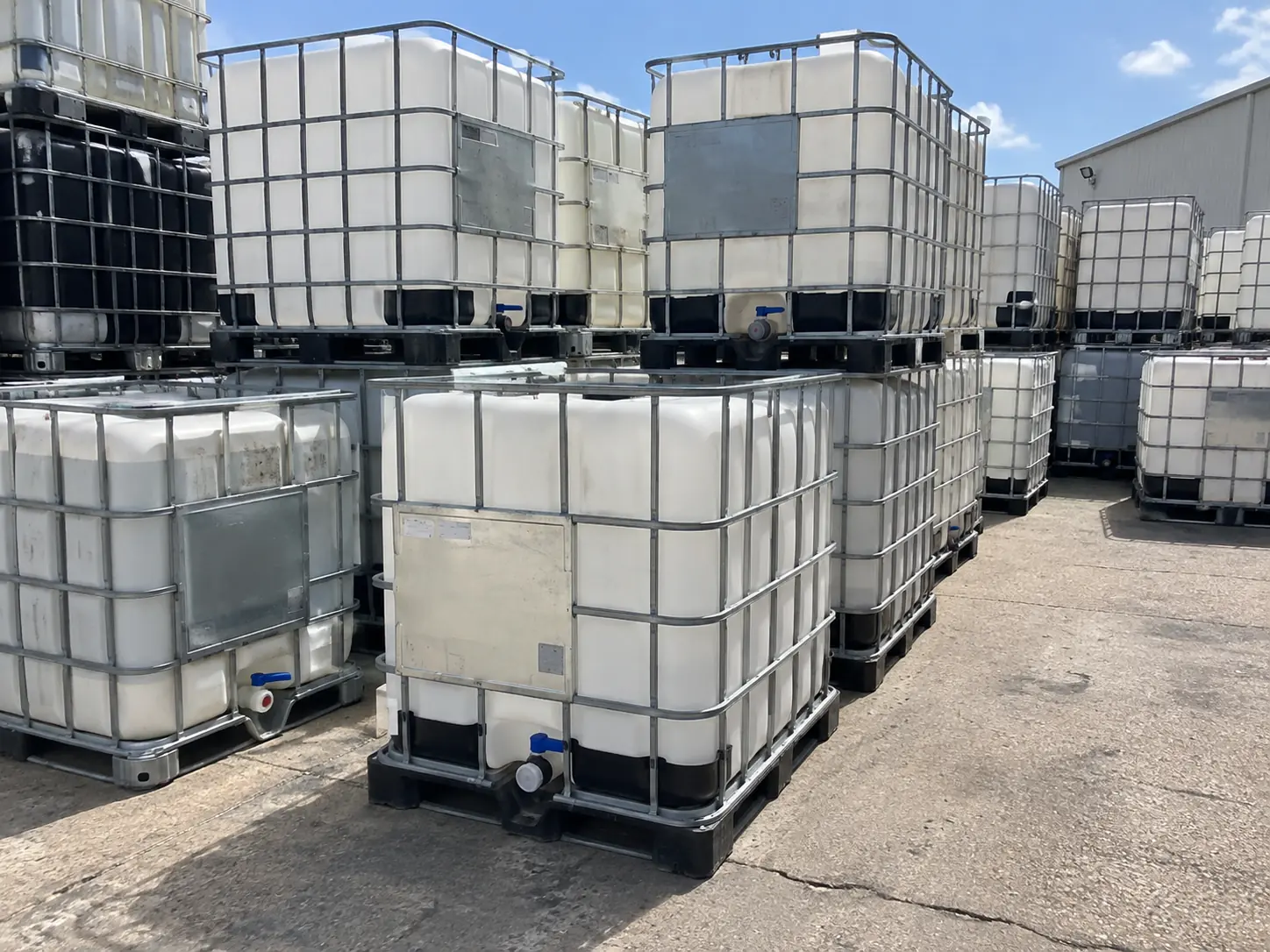
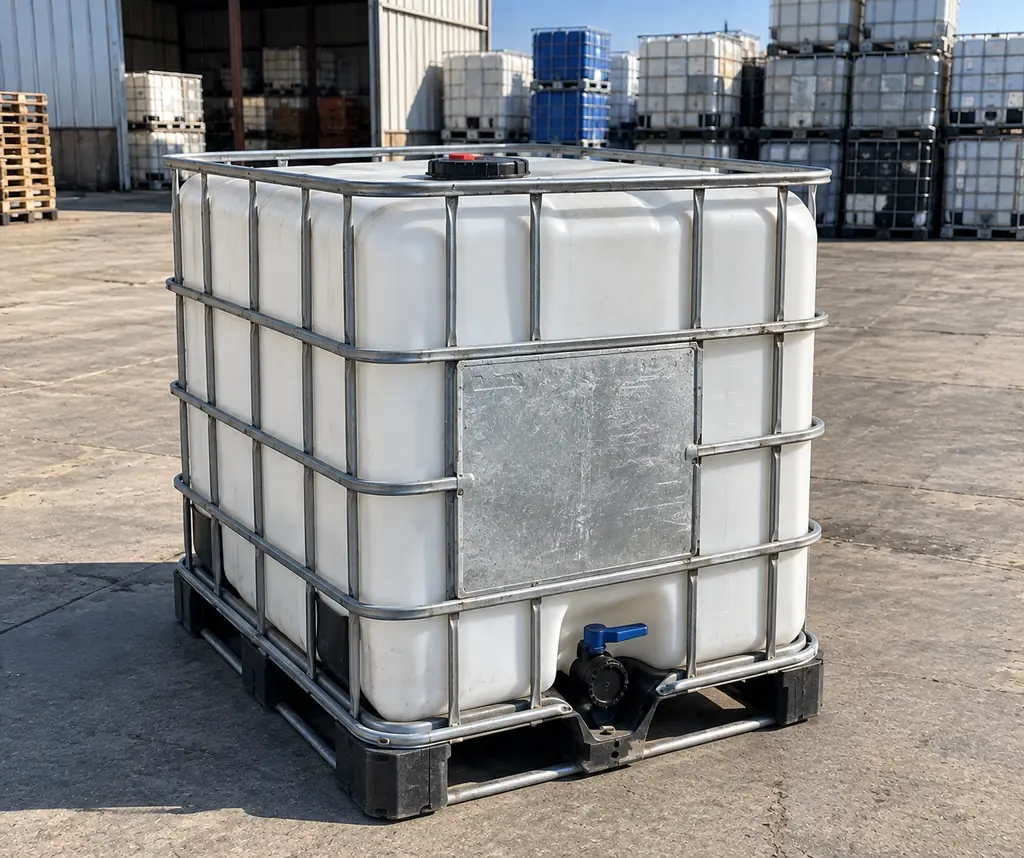
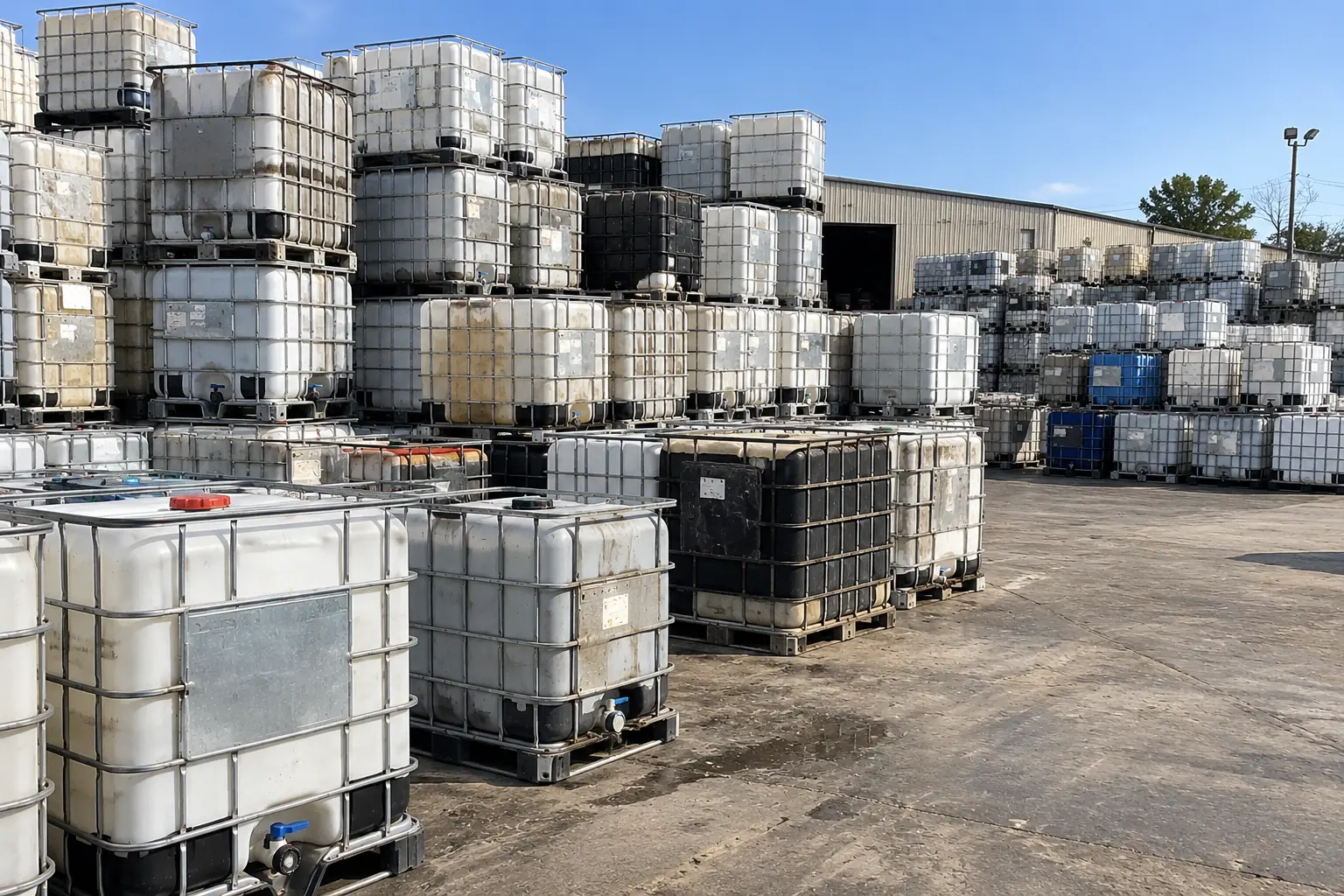
What it looks like
What to expect at each end of the range.
Condition varies from lot to lot. If appearance matters, ask the partner supplier for photographs of the units allocated to your order.
What to request
Configurations you can ask for.
Availability depends on partner suppliers, and it moves. Tell us the configuration and quantity and a partner supplier follows up with what they can offer.
| Configuration | Notes |
|---|---|
| 275 gal reconditioned | The most common used format; usually offered in several cosmetic grades |
| 275 gal rebottled | Typically built to order from a reused cage and a new bottle |
| 330 gal reconditioned or rebottled | Same footprint, taller; less common than 275 |
| Smaller formats (120 – 220 gal) | Less common; ask early |
| Stainless | Sizes and fittings vary unit by unit |
| New, standard or UN marked | Available to order through partner suppliers |
What to ask about
Questions worth putting on every quote.
Suppliers include different things as standard. Asking these up front makes quotes comparable.
Ask
Valve seat
Is the valve or its seat replaced? The seat is a component that commonly wears first.
Ask
Cap gasket
Is the cap gasket new? Old gaskets harden with UV and age and are a common cause of weeping.
Ask
Leak test
Has the unit been leak or pressure tested, and how?
Ask
Grade definition
What exactly does the supplier's grade mean for bottle and cage condition?
Ask
Photographs
Can you see photos of the units allocated to your order?
Ask
Cleaning record
How was the bottle cleaned, and is there a record?
Ask
Prior contents
Is the previous content known and documented?
Ask
Outlet dust cap
Keeps grit out of a valve seat in transit.
Ask
Returns and warranty
What happens if a unit arrives leaking? Terms are set by the supplier.
Ordering
How quantity tends to affect the quote.
Freight is a large part of landed cost, and it consolidates in steps. Knowing roughly where your order sits helps you ask the right question.
| Order size | What usually changes | Advice |
|---|---|---|
| A few units | Shipped LTL, a pallet position or two | Freight dominates; a nearby supplier helps |
| Up to a pallet position | Better use of each position | Ask whether one more unit fills the position |
| Partial load | LTL vs. partial truckload | Ask for both options |
| Full truckload | Dedicated truck | Usually the lowest cost per unit |
| Ongoing volume | Scheduled orders | Describe your schedule in the request |
Five ways buyers overspend
- Buying Grade A for a Grade B application. Staining is dye that migrated into the wall. If nobody outside your building looks inside the container, cosmetic grade usually matters less than condition and compatibility.
- Buying new to avoid prior contents. A rebottled unit has a bottle that has never held anything, and typically costs less than new. The concern is legitimate; the solution may be cheaper than you think.
- Ordering just under a pallet position. Freight is charged by space. Ask whether one more unit fits the space you are already paying for.
- Paying for documentation you do not need. If your use carries no documentation requirement, you may not need to pay for it. Check current regulations for your product first.
- Ignoring freight until the end. Freight can be a large share of landed cost, especially over long distances. Ask for it separately at the start.
Five ways buyers underspend
- Skipping documentation on a food application. You will meet this decision again, in an audit, with less time and worse options.
- Reusing old gaskets. Gasket elastomers can absorb what they have been sitting in and give some of it back to the next product. A new set is cheap insurance.
- Buying the cheapest valve. The valve is a common failure point, and it fails onto a floor. A full-port ball valve suits viscous product.
- No spill containment. Inexpensive relative to a spill, and often required. Check current regulations for your site.
- No stand for a dispensing application. The outlet sits low to the floor. Somebody will improvise, and improvising around a full tote weighing well over a ton is how people get hurt.